

per person sharing
From $6,750 per person
7 Nights / 8 days
Lemosho Gate, Mti Mkubwa Camp, Shira 1 Camp, Shira 2 Camp, Lava Tower, Barranco Camp, Karanga Camp, Barafu Camp, Uhuru Peak
The Lemosho Route is widely considered one of the most scenic and best routes to climb Mount Kilimanjaro. It approaches from the western side of the mountain, offering a remote and less crowded start before joining the Machame Route along the southern circuit.
This route is ideal for climbers seeking a longer itinerary with excellent acclimatization and a higher summit success rate. The gradual ascent profile, combined with the “walk high, sleep low” approach, allows your body more time to adjust to the altitude.
The Lemosho Route passes through diverse and stunning landscapes, including lush rainforest, expansive moorland, the Shira Plateau, alpine desert, and the arctic summit zone. It is a perfect choice for those looking for a quieter, more immersive, and rewarding Kilimanjaro trekking experience.
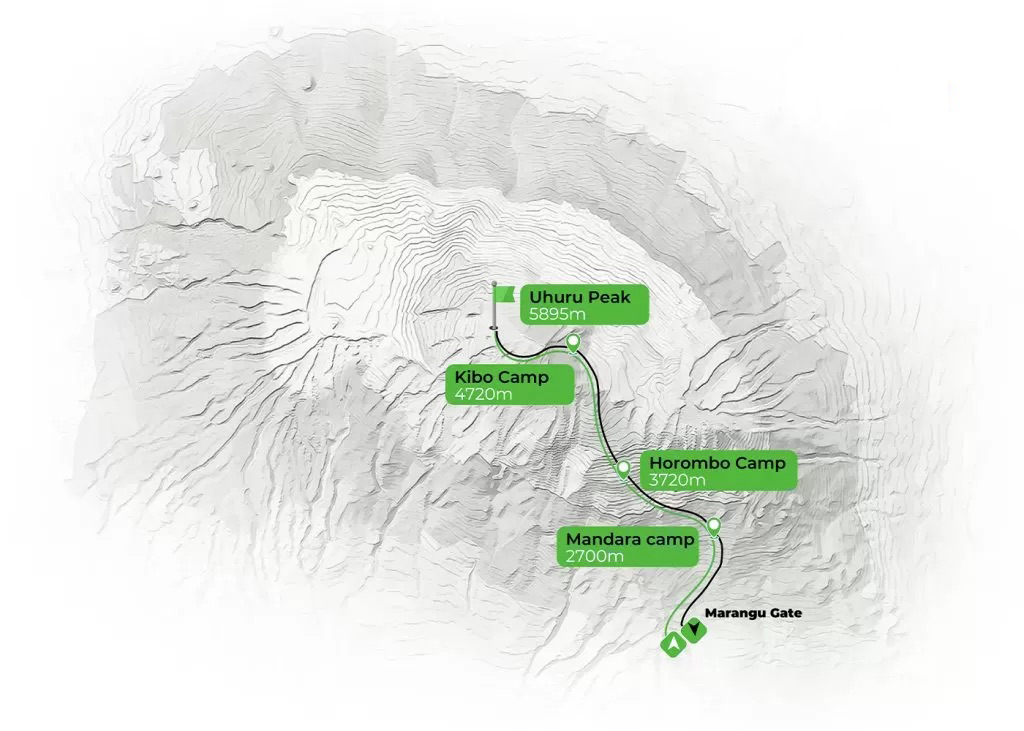
Your journey begins with a drive to Lemosho Gate on the western side of the mountain. After registration, the trek starts through dense montane rainforest.
The trail is quiet and less traveled, offering a peaceful introduction to the climb. The forest is rich in wildlife, and you may spot monkeys and hear birds throughout the day. The trek is gentle and ends at Mti Mkubwa Camp, surrounded by thick forest.
Elevation: 2,100 m (6,890 ft) to 2,650 m (8,694 ft)
Distance: 6 km (4 miles)
Hiking Time: 3–4 hours
Habitat: Montane Forest
After breakfast, the trail continues upward, gradually leaving the rainforest behind. As you gain elevation, the vegetation changes into heath and moorland with open views.
The path climbs steadily onto the Shira Plateau, one of the most scenic parts of the mountain. The landscape is wide and dramatic, offering a completely different feel from the forest below.
Elevation: 2,650 m (8,694 ft) to 3,500 m (11,483 ft)
Distance: 8 km (5 miles)
Hiking Time: 5–6 hours
Habitat: Moorland
This is a shorter and more relaxed day, allowing time for acclimatization. You trek across the Shira Plateau with gentle ascents and expansive views of Kibo Peak. The terrain is open, and the pace is slow, helping your body adjust to the altitude. The day offers excellent scenery and a chance to enjoy the calm environment.
Elevation: 3,500 m (11,483 ft) to 3,850 m (12,631 ft)
Distance: 7 km (4 miles)
Hiking Time: 3–4 hours
Habitat: Moorland
Today is an important acclimatization day. You climb steadily toward Lava Tower, reaching a higher altitude before descending again to Barranco Camp.
This “walk high, sleep low” strategy helps your body adapt effectively. The scenery becomes more rugged, with volcanic rock formations and dramatic views. Barranco Camp is set in a beautiful valley below the Barranco Wall.
Elevation: 3,850 m (12,631 ft) to 4,630 m (15,190 ft), then down to 3,960 m (12,992 ft)
Distance: 10 km (6 miles)
Hiking Time: 6–7 hours
Habitat: Semi-Desert
The day begins with the climb up the famous Barranco Wall, a steep but manageable scramble that offers rewarding views. After reaching the top, the trail continues across ridges and valleys toward Karanga Camp. This is a shorter trekking day, giving you time to rest and further acclimatize while enjoying the alpine scenery.
Elevation: 3,960 m (12,992 ft) to 4,035 m (13,238 ft)
Distance: 5 km (3 miles)
Hiking Time: 3–4 hours
Habitat: Alpine Desert
You continue your ascent toward Barafu Camp, completing the southern circuit of the mountain. The trail is rocky and exposed, with little vegetation. As you approach camp, you will have clear views of the summit. After arrival, you will rest, eat early, and prepare for the summit attempt later that night.
Elevation: 4,035 m (13,238 ft) to 4,640 m (15,223 ft)
Distance: 4 km (2 miles)
Hiking Time: 3–4 hours
Habitat: Alpine Desert
The summit attempt begins just after midnight. You climb steadily through loose scree toward Stella Point, the most demanding part of the trek. From there, you continue to Uhuru Peak, the highest point in Africa. After celebrating at the summit and taking in the views, you descend back to Barafu Camp for a short rest before continuing down to Mweka Camp. This is a long and challenging day but also the most rewarding.
Elevation: 4,640 m (15,223 ft) to 5,895 m (19,341 ft), then down to 3,100 m (10,170 ft)
Distance: 5 km (3 miles) ascent / 13 km (8 miles) descent
Hiking Time: 6–8 hours up / 5–6 hours down
Habitat: Arctic Summit Zone to Montane Forest Edge
On the final day, you descend through the forest to Mweka Gate. The trail can be wet and muddy at lower elevations, but the air becomes warmer and more comfortable. This final stretch is relaxed, allowing you to reflect on your journey. Upon arrival, you receive your summit certificate, marking the successful completion of your Kilimanjaro climb.
Elevation: 3,100 m (10,170 ft) to 1,680 m (5,500 ft)
Distance: 10 km (6 miles)
Hiking Time: 3–4 hours
Habitat: Montane Forest
The best times are during the dry seasons:
A moderate to high level of fitness is recommended. Regular hiking and cardio training greatly improve your experience.
Health & Protection
6 Days The Marangu Route Kilimanjaro Climb
For More Details
6 Days The Rongai Route Kilimanjaro Climb
For More Details
7 Days The Machame Route Kilimanjaro Climb
For More Details