

per person sharing
From $7,830 per person
8 Nights / 9 days
Lemosho Gate, Mti Mkubwa Camp, Shira 1 Camp, Shira 2 Camp, Lava Tower, Barranco Camp, Karanga Camp, Barafu Camp, Uhuru Peak
The Northern Circuit Route is the longest and one of the most scenic routes on Mount Kilimanjaro, offering excellent acclimatization and the highest summit success rate. It begins on the western side of the mountain and follows the Lemosho trail before branching north around the remote northern slopes.
This route is ideal for trekkers seeking a quieter, less crowded experience with diverse landscapes and gradual altitude gain. The extended itinerary allows for proper acclimatization using the “walk high, sleep low” approach, making it one of the safest and most rewarding ways to reach the summit.
The Northern Circuit showcases the full beauty of Kilimanjaro, passing through rainforest, moorland, alpine desert, and the arctic summit zone, while offering unique panoramic views from rarely visited parts of the mountain.
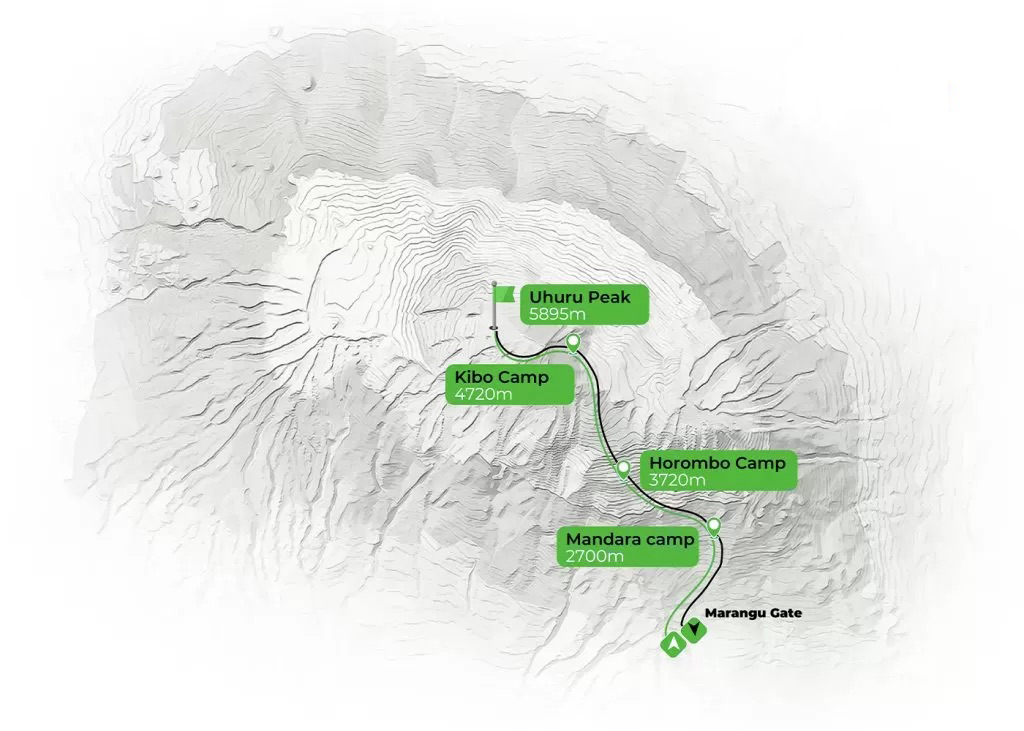
After breakfast and briefing, drive to Londorossi Park Gate (about a 3-hour drive). From here a forest track requiring a 4WD vehicle leads to Lemosho Glades. Walk along forest trails to Mti Mkubwa (big tree) campsite.
Elevation: 1830m/6000ft to 2650m/8700ft
Distance: 6km/4mi
Habitat: Montane Forest
After breakfast, we continue as the trail gradually steepens and enters the giant heather moorland zone. After several streams are crossed we continue over the Shira Ridge then gently downwards to Shira 1 camp located by a stream on the Shira Plateau.
Elevation: 2650m/8700ft to 3500m/11,500ft
Hiking Time: 4-5 hours
Habitat: Moorland
After breakfast, a gentle hike across the plateau leads to Shira 2 camp on moorland meadows by a stream. A variety of hikes are available on the Plateau, making this an excellent acclimatization day.
Elevation: 3500m/11,500ft to 3850m/12,600ft
Distance: 8km/5mi
Habitat: Moorland
This day is a long trek heading east which passes through the ‘Garden of the Senecios’ and then enters the high alpine desert zone. The morning is spent trekking up to Lava Tower and the iconic Shark’s Tooth rock formation at 4,600 meters, where you will have lunch.
After lunch you will join the Northern Circuit heading down to Moir Camp at 4,200 meters. This is an important day in your trek as you will get to experience high altitude and then sleep low, which is good for the acclimatisation process.
Elevation: 3850m/11,500ft to 4200m/13780ft
Distance: 14km/8mi
Habitat: Moorland
Meals: Breakfast, Lunch and Dinner
Today, we encountered a moderately steep climb out of Moir Valley. We can do an optional hike to the summit of Little Lent Hill at 4,375 meters before returning to the Northern Circuit trail. From here the route follows a series of inclines and declines, skirting around the northern slopes of Kibo to Buffalo Camp.
Elevation: 4200m/13,780ft to 4020m/13,188ft
Distance: 12km/7mi
Habitat: High Alpine
We start the day with a climb up the Buffalo ridge and down into Porfu Camp where lunch is usually served. The route then continues east around the northern slopes to the Rongai Third Cave.
The trek is shorter than the day before and by now you should be feeling well acclimated to the altitude. You will arrive at the Third Cave just around mid-afternoon.
Elevation: 4020m/13,188ft to 3800m/12,467ft
Distance: 8km/5mi
Habitat: High Alpine
Today involves a steady incline up and over the Saddle which sits between the peaks of Kibo and Mawenzi Peak. Trekkers then continue walking south-west up to School Hut. After arriving at School Hut you will be served an early dinner and then you should get some shut-eye as you will be awoken before midnight to start your summit attempt.
Remember to prepare all your gear, including warm clothes, insulated water bottles, snacks, headlamp and camera before going to bed.
Elevation: 3800m/12,467ft to 4800m/15,748ft
Distance: 15km/8mi
Habitat: Alpine Desert
You will be awoken around 11:30 with hot tea and biscuits and will then begin the steep incline up the slopes of Kibo under the cover of darkness. Your first check-point is Hans Meyer Cave where you will take a short break. The climb steepens as you approach Gilman’s Point (5,681 meters), which will be around 5-6 hours after departing School Hut.
Your stay here will be brief so get as many pictures as you can of the incredible views and surrounding glaciers. You will then retrace your steps back around the crater rim to Stella Point (5,739 meters) where you will turn south and head down the heavily screed slopes of Kibo to Barafu Camp (4,680 meters).
Elevation: 4800m/15,748ft to 5895m/19,340ft
Down to 3950m/12,959ft
Distance: 6km/3.5mi up / 11km/6mi down
Habitat: Stone scree and ice-capped summit
After breakfast we continue the descent down to the Mweka Park Gate to receive your summit certificates. At lower elevations, it can be wet and muddy. Gaiters and trekking poles will help. Shorts and t-shirts will probably be plenty to wear (keep rain gear and warmer clothing handy).
Ona Safaris vehicle will be waiting for you at Mweka gate to drive you back to your hotel in Moshi (around 60 minutes).
Elevation: 3950m/12,959ft to 1680m/5500ft
Distance: 10km/6mi
Habitat: Forest
The best times are during the dry seasons:
A moderate to high level of fitness is recommended. Regular hiking and cardio training greatly improve your experience.
Health & Protection
6 Days The Marangu Route Kilimanjaro Climb
For More Details
6 Days The Rongai Route Kilimanjaro Climb
For More Details
7 Days The Machame Route Kilimanjaro Climb
For More Details